
Separate the visible movement from your interpretation
Sie nickt. describes a nod. Sie ist einverstanden. says that she agrees. In a particular conversation, the nod may express agreement, but the two statements do different jobs. A nod can also acknowledge an explanation or greet someone. If a decision matters, check it with words.
The same care helps when reading a story. Er schüttelt den Kopf. names the action. The surrounding dialogue may make refusal, surprise or incomprehension clear. Keep your first description close to what the text actually supplies. You do not need to invent a feeling or a national rule to use the correct verb.
nicken

Position 1
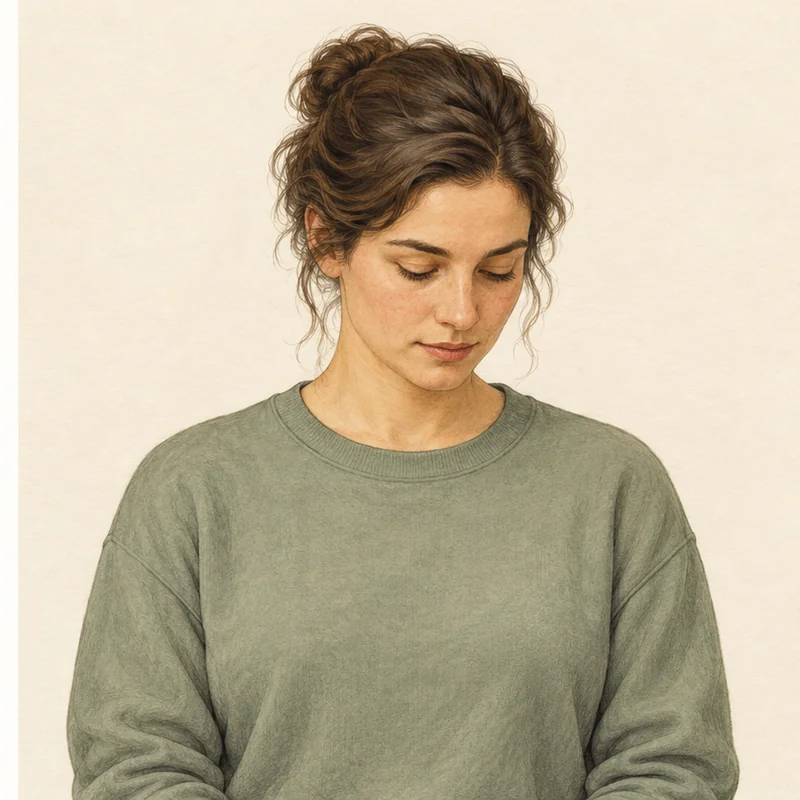
Position 2
Head level, then tilted downward. One phase of the nod is shown.
den Kopf schütteln

Position 1

Position 2
The head changes from one side to the other; the shoulders stay still.
winken

Position 1

Position 2
The same open hand changes position at the wrist.
auf etwas zeigen

Position 1
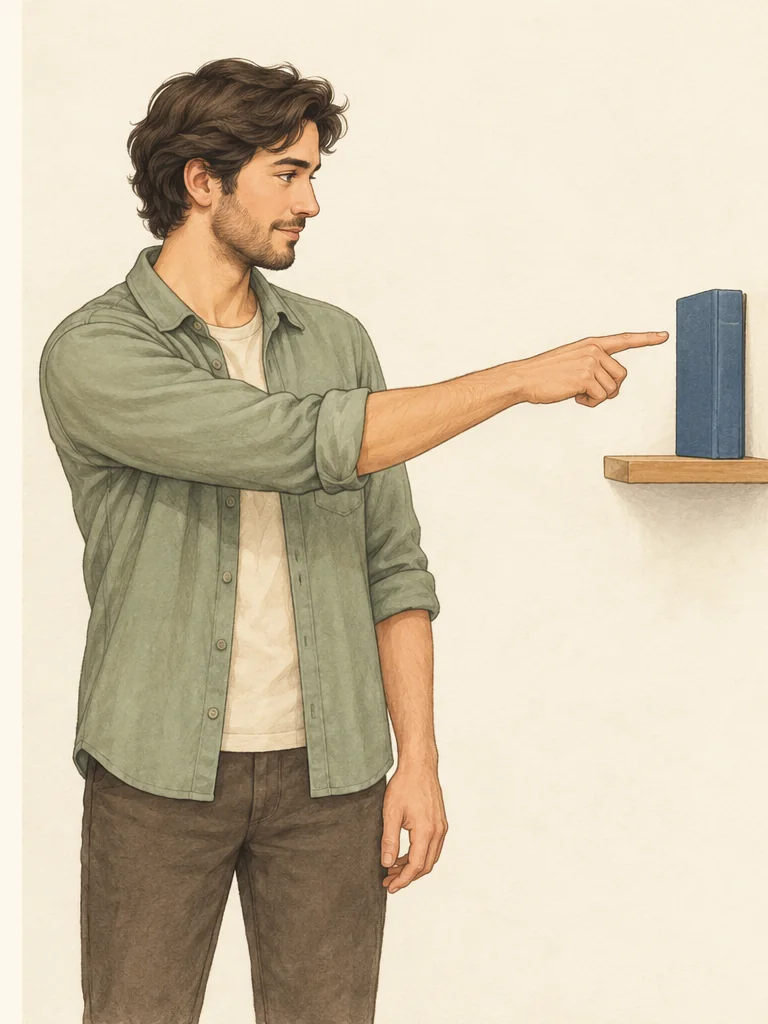
Position 2
The person extends an index finger toward the blue book.
Name the movement before interpreting it. The situation and the person’s words supply its possible meaning.
Five useful German phrases for gestures
| Action | German example | Context |
|---|---|---|
| nicken | Mara nickt kurz. | She has heard the explanation; whether she agrees still needs context. |
| den Kopf schütteln | Jonas schüttelt den Kopf. | He then says that the information is surprising. |
| winken | Linh winkt ihrer Freundin. | She is saying goodbye across the square. |
| auf etwas zeigen | Amir zeigt auf den blauen Ordner. | He identifies which folder he means. |
| mit den Schultern zucken | Alex zuckt mit den Schultern. | Alex then says: Ich weiß es nicht. |
These are invented contexts, not universal translations from movements to messages. Winken can also attract attention or invite someone closer; surrounding words distinguish those purposes. A shrug followed by Ich weiß es nicht is clearer than a shrug alone. The dictionary entries linked in the sources explain the action words and their uses.
Keep the words that belong to the action
Learn den Kopf schütteln as a phrase: Ich schüttle den Kopf. German commonly uses the definite article for this body-part expression. For the shrug, keep both the preposition and plural: mit den Schultern zucken. A noun for the action is das Achselzucken.
With a recipient, winken can take the dative: Ich winke meiner Freundin. With a pointed-at object, learn auf + accusative: Er zeigt auf den Ordner. Here zeigen means pointing towards something. Er zeigt mir den Ordner instead means that he shows me the folder. The object might be brought closer or opened; pointing is not specified.
When recording new vocabulary, keep one whole example rather than translating each preposition separately. Say the actor, the movement and any object: Linh zeigt auf die obere Schublade. The drawer gives the gesture a visible reference.
Ask a specific question when the meaning matters
A short question can test your interpretation without accusing the other person of being unclear. After a nod about an arrangement, ask Passt der Termin für Sie? After an unclear point, ask Meinen Sie den blauen Ordner? You name the information you need instead of treating the gesture as a complete answer.
For general clarification, try Wie meinen Sie das? or Können Sie das bitte mit Worten erklären? Choose du or Sie consistently with the conversation: Meinst du diesen Ordner? is the informal version. Tone and relationship still affect how a question sounds.
The guide to explaining, asking and answering helps with the next verbal response. For hier, da and dort, use the direction and reference guide. Those small words often rely on the object or place a person is indicating.
Two short conversations with different evidence
At a shared desk: A: Brauchen Sie diesen Ordner? B zeigt auf den anderen Ordner. A: Meinen Sie den blauen? B: Ja, genau. The pointing narrows the options, and the final words confirm the choice. If both folders are blue, ask about another visible feature instead.
While arranging a meeting: A: Wir könnten uns am Dienstag treffen. B nickt. A: Passt Dienstag für dich? B: Ich habe deinen Vorschlag gehört. Ich muss noch in meinen Kalender schauen. The clarification prevents a mistaken booking. In this invented scene, the nod acknowledges the proposal and does not confirm availability.
Describe these exchanges without judging the speakers' personalities. You know what they did and said in the scene. You do not know whether either person is generally friendly, shy or reliable. For another social setting, the guide to German toasts discusses words and individual comfort around a toast.
Eight tasks: observe, name and clarify
A person briefly lowers and raises their head. Choose nicken or winken.
Answer and reason
Nicken. The described movement involves the head, not a waving hand.
Complete: Jonas schüttelt … Kopf.
Answer and reason
den: Jonas schüttelt den Kopf. Learn the action phrase with its article.
Does a nod always confirm a meeting time?
Answer and reason
No. In the meeting example it acknowledges the proposal. Passt Dienstag für dich? checks the actual arrangement.
Someone points towards a folder. Choose auf den Ordner zeigen or den Ordner öffnen.
Answer and reason
Auf den Ordner zeigen. Opening it would be a different action not supplied by the scene.
Complete the recipient: Ich winke meiner Freundin or meine Freundin?
Answer and reason
Ich winke meiner Freundin. The person receiving the wave is in the dative.
Alex shrugs. Can you conclude that Alex refuses to help?
Answer and reason
No. That intention is not established. Ask what Alex means; the example only becomes explicit when Alex says Ich weiß es nicht.
Ask formally whether the other person means the blue folder.
One answer and reason
Meinen Sie den blauen Ordner? The question checks a named reference and uses formal Sie.
Which sentence stays with an observation: Sie schüttelt den Kopf or Sie hasst meinen Vorschlag?
Answer and reason
Sie schüttelt den Kopf. Hatred is a strong interpretation requiring additional evidence.
Practise a movement and one clarification
Choose one action phrase. Write a two-line fictional exchange that makes its purpose clear. Then remove the spoken reply and list what is still uncertain. This helps you separate a correct action word from an unsupported interpretation.
You can practise with descriptions instead of performing movements. The learning task is to name an action, identify its reference and ask for the missing information. Physical imitation is optional; the German phrase remains useful when reading or describing a conversation.
Questions about this topic
What is the German verb for nodding?
Nicken describes nodding. A short example is Sie nickt. Whether the nod expresses agreement, acknowledgement or a greeting depends on the context.
How do I say shake your head in German?
The phrase is den Kopf schütteln. For example: Jonas schüttelt den Kopf. Surrounding words help clarify whether this expresses refusal, surprise or another reaction.
How can I check an unclear gesture politely?
Ask about the specific information: Meinen Sie den blauen Ordner? or Passt der Termin für Sie? For a general explanation, try Können Sie das bitte mit Worten erklären?
Sources and further learning
Source links checked: .
Use this in your German practice
Try the examples and answer checks on this page. For a wider routine, explore Lingeva’s grammar, vocabulary and speaking practice. Available app features and plan allowances are explained on the plan page.